KOMORUThe Skeleton Painter
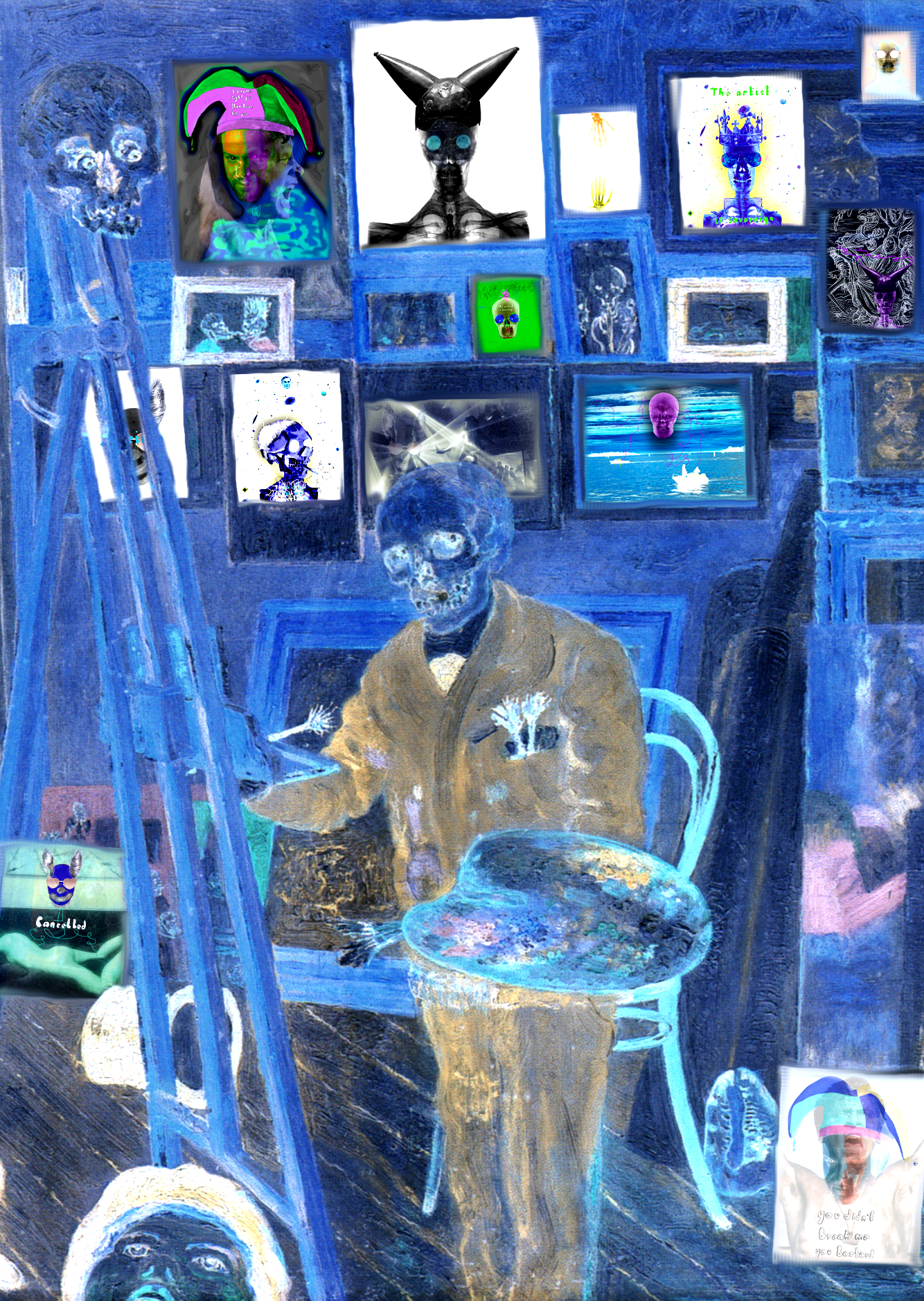
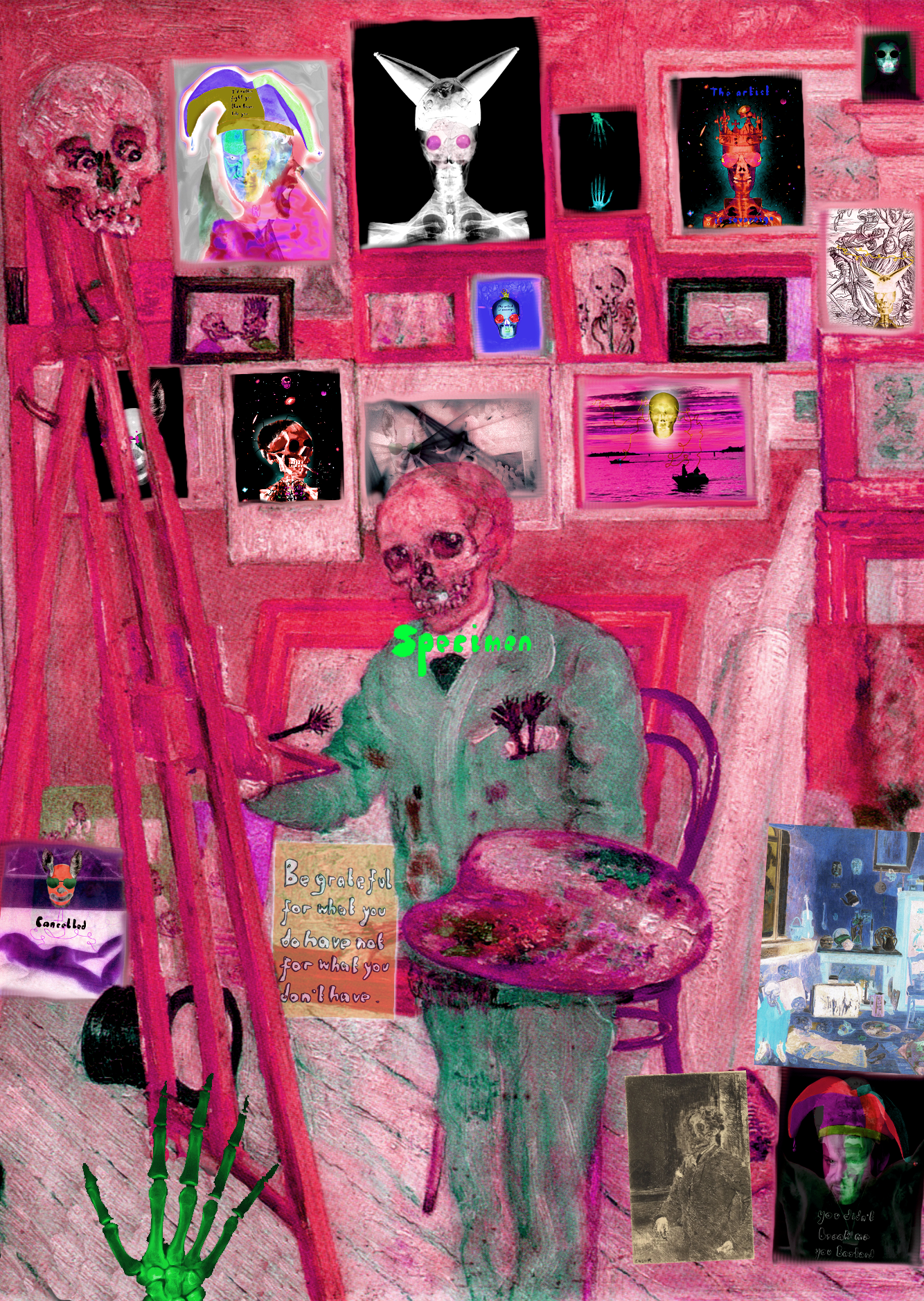
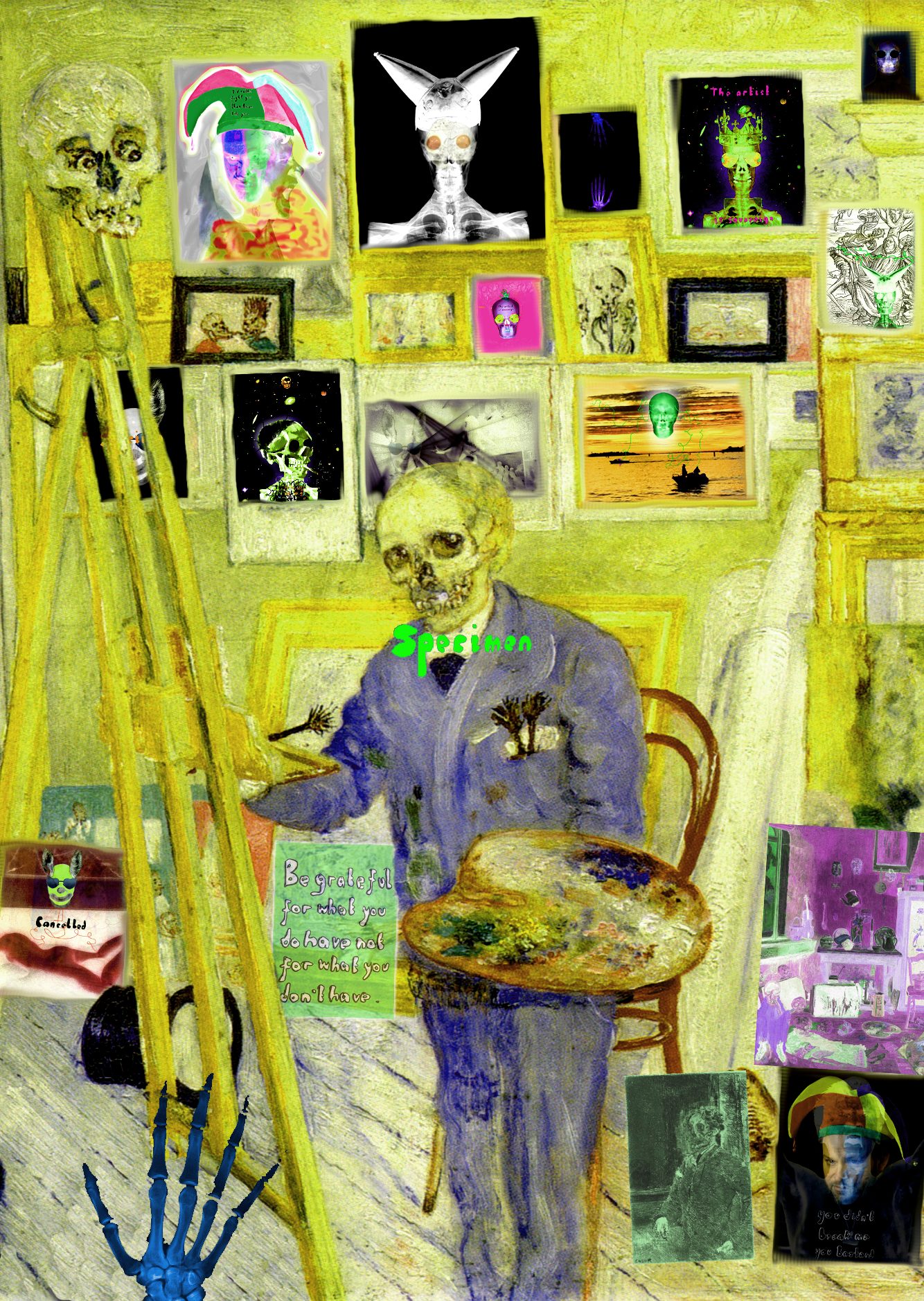
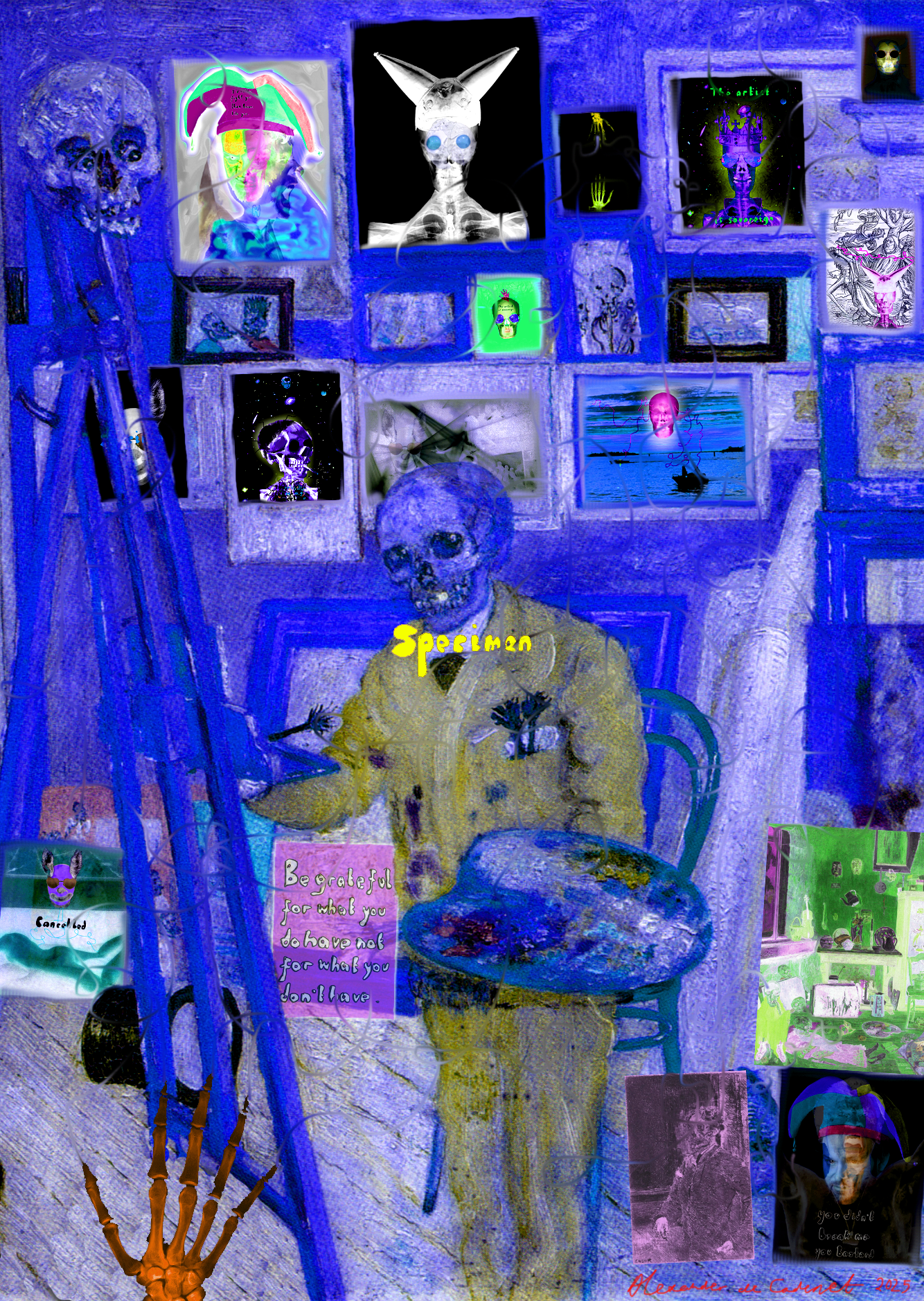
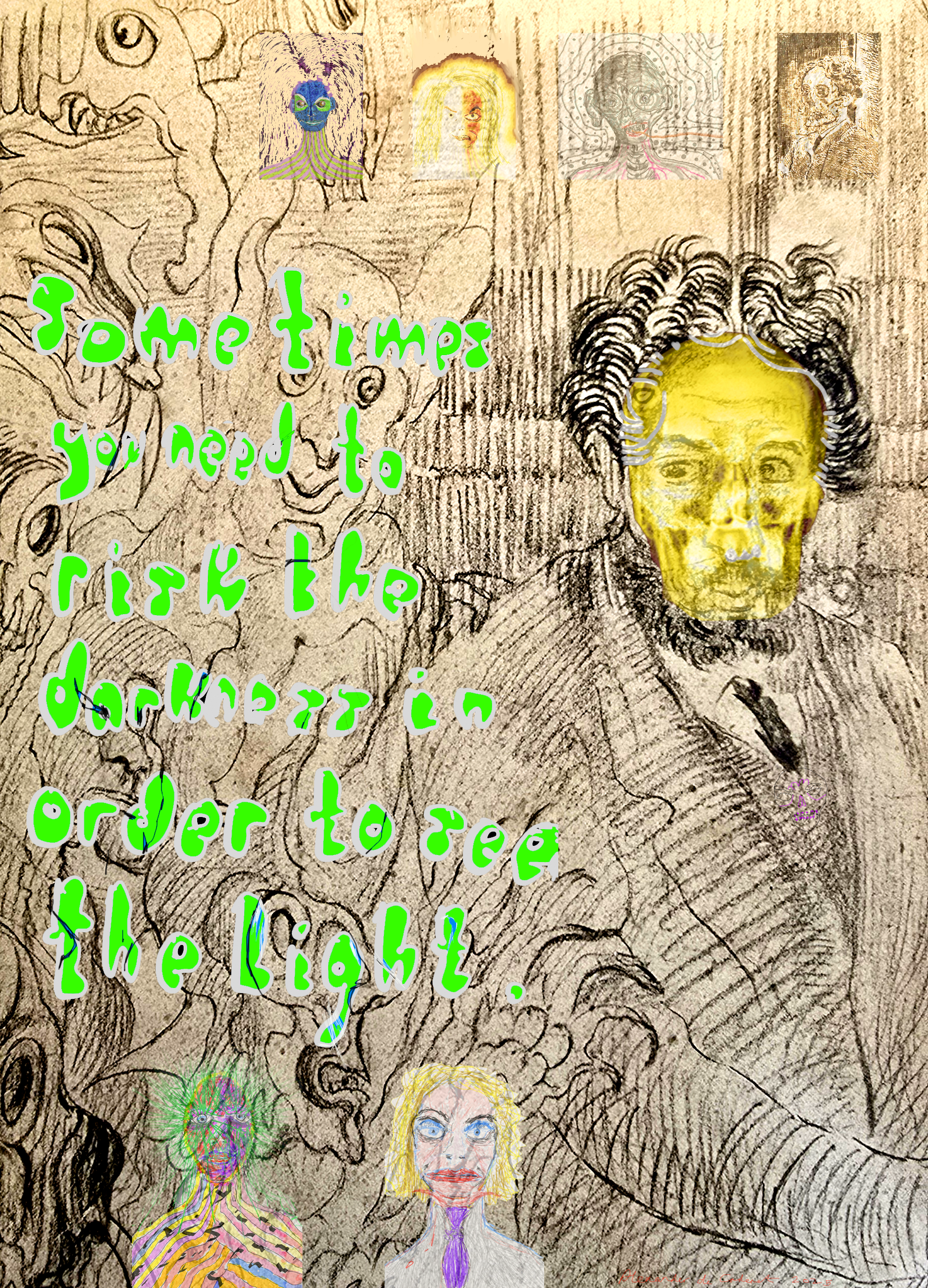
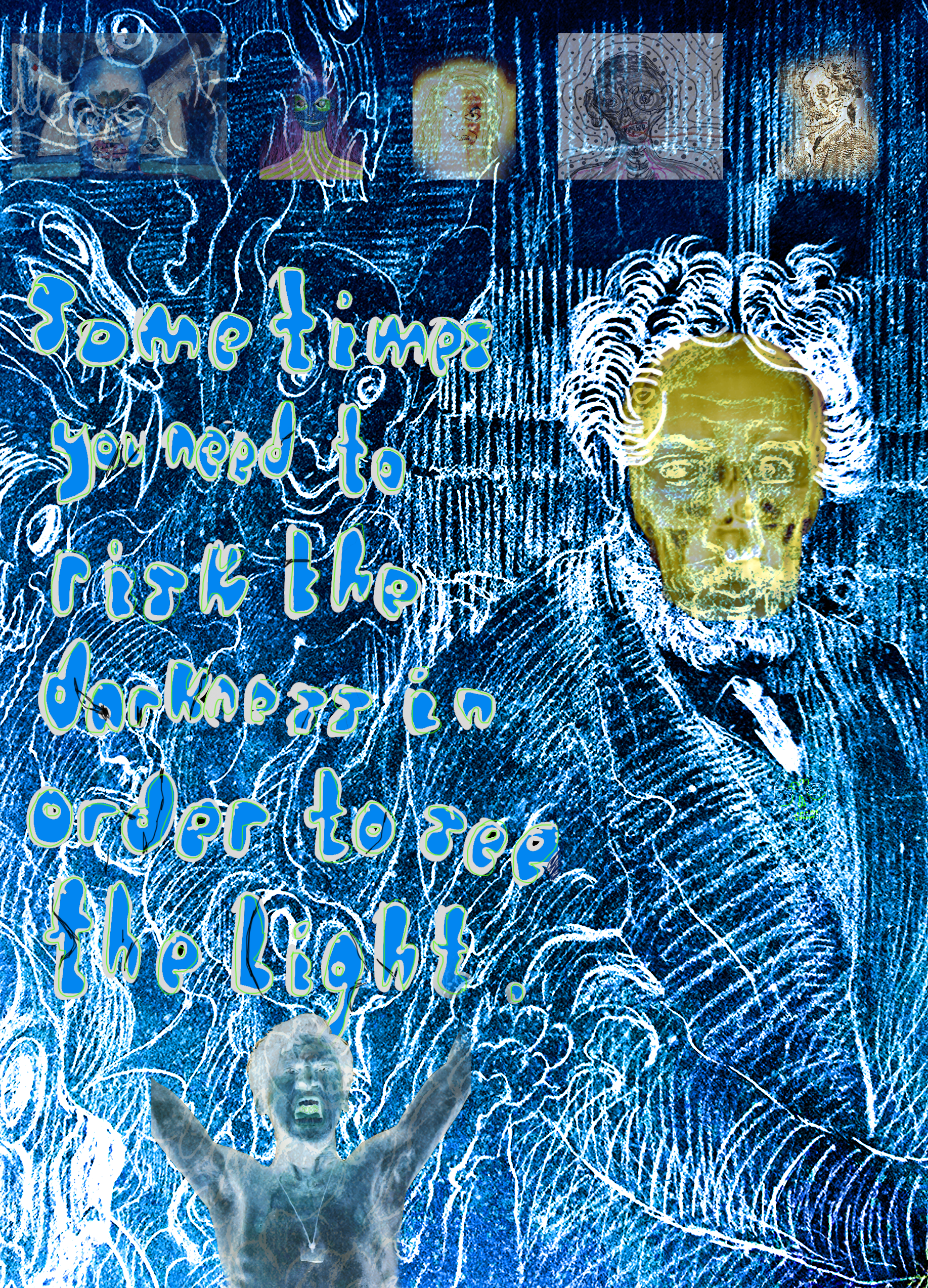
The Skeleton Painter is an archetype that confronts mortality through creation, transforming the fear of death into a lifelong artistic dialogue. From a Jungian perspective, this figure engages directly with the shadow, using skeletal imagery to integrate what society represses: decay, impermanence, and the fragility of identity. This archetype draws strongly from the work of James Ensor, whose studio scenes often included walls crowded with his own paintings, forming a visual archive of his evolving psyche. In one such work, Ensor surrounded himself with the accumulated imagery of his career, anticipating the archival impulse later echoed in Marcel Duchamp's Boîte-en-valise—a portable retrospective containing miniature reproductions of his oeuvre. In this skull portrait, the artist continues that lineage by placing earlier archetypes from the series within the studio space. The Skeleton Painter thus becomes both creator and curator of his own mythology, reflecting on a lifetime of images as a single psychic narrative. Art here functions as a mirror of the soul across time, revealing how an entire body of work can serve as a map of individuation.